Marine Extension
The goal of Maine’s Marine Extension Team (MET), a collaboration Sea Grant and University of Maine Cooperative Extension, is to provide coastal communities and other stakeholders with scientific information and assistance. At the same time, the extension team ensures that researchers are aware of the most pressing issues facing the state. Information is transferred to and from citizens by extension associates who design and deliver local outreach programs. Through this process, communities gain the capacity to make informed decisions on the management of coastal and marine resources that promote ecological and economic sustainability. MET members work with communities to address problems and respond to opportunities in four major areas: ecosystem health; sustainable coastal communities; fisheries and aquaculture, and coastal community resilience.
The Origin of Maine’s Marine Extension Team
Today’s Marine Extension Team, a partnership between Maine Sea Grant and University of Maine Cooperative Extension, has its roots in NOAA’s Marine Advisory Service, which was established in 1973. When NOAA was formed in 1970, plans were made to include advisory services in the new organization, because the Stratton Commission and other groups had recommended that NOAA establish a system for information transfer as part of its total functions. NOAA assigned Sea Grant responsibility for leading and coordinating the Marine Advisory Service, in part because in some states Sea Grant already was doing advisory work. In addition, the Sea Grant program and its philosophy permitted a flexibility that was unusual in governmental programs—a large measure of freedom to match marine resource needs with capabilities for meeting those needs. Paul Ring, the first marine extension specialist in Maine, was based at the Darling Center and worked on recreation and coastal zone planning. In 1974, Mark Richmond joined the Advisory Service as an aquaculture technician, part of a network of cooperators in other marine-related organizations and institutions in Maine, including Cooperative Extension, College of the Atlantic, Department of Marine Resources, Maine Maritime Academy, Marine Trades Center in Eastport, and the Southern Maine Vocational Technical Institute in Portland. Early extension activities included fishing business management workshops, courses in fishing safety that earned the Marine Advisory Program a Public Service Commendation from the US Coast Guard in 1983, and local clam flat management. Several marine extensions specialists were hired in the following decades. In 1999, interim extension leader Ron Beard helped create the memorandum of understanding between Sea Grant and Cooperative Extension that created the current Marine Extension Team.
Meet the Team
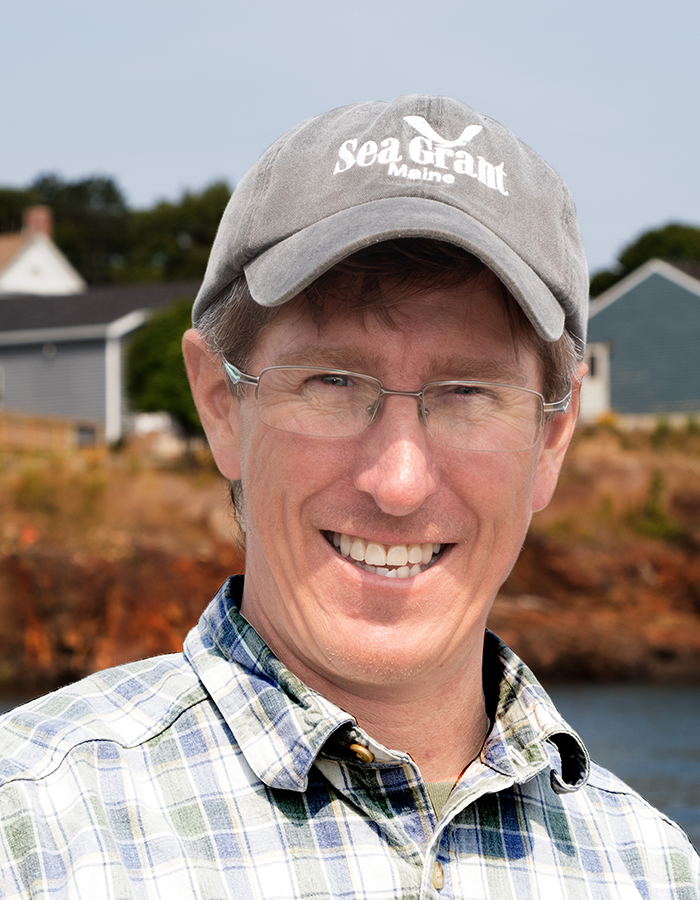
Chris bartlett
Senior Extension Program Manager, Staff Development and Research Support
207.214.7061